

Toronto is the largest and most connected market in Canada, and that shapes what makes a good IPTV setup here specifically. The city has excellent internet infrastructure, one of the most diverse populations in the world — which drives real demand for international channels you won’t find on a standard cable package — and a sports calendar that keeps households busy most of the year. This guide looks at IPTV in Toronto through that local lens: the internet you’ll likely be streaming over, the channels Torontonians actually want, and how to get a reliable setup in a condo or a house across the GTA.
Quick answers
- Internet is rarely the problem here: Toronto has strong fibre and cable coverage from Bell, Rogers, and condo-focused providers like Beanfield, so most homes easily have the speed IPTV needs.
- International channels are the big draw: Toronto’s diversity means demand for South Asian, Caribbean, Chinese, Italian, Portuguese and many other channels that cable bundles handle poorly.
- Sports, year-round: Leafs, Raptors, Blue Jays, TFC and the Argos give the city a packed calendar fans want to follow.
- Works anywhere in the GTA: downtown condo or a house in Scarborough, the setup is the same — a player app and a connection.
The internet side: Toronto is well served
One genuine advantage of streaming IPTV in Toronto is that the connection underneath it is rarely the weak link. The city has some of the best broadband availability in the country. Bell’s fibre reaches large parts of the city, Rogers’ cable network is extensive, and in the downtown core and the forest of condo towers, Beanfield has become a popular fibre choice with residents in many buildings. Smaller resellers like Carrytel and TekSavvy operate over those networks too, often at lower prices. For IPTV this matters because a stable 25 Mbps or more is all you need for reliable HD, and in most of Toronto that’s easy to get — the sort of speeds available here comfortably clear the bar even for 4K.
The practical takeaway is that if you do run into buffering in Toronto, it’s more likely your in-home Wi-Fi or device than your actual internet plan. A wired connection to your streaming device solves most of it; our buffering guide covers the rest.
Why international channels drive IPTV demand in Toronto
This is where IPTV genuinely fits the city better than traditional cable. Toronto is one of the most multicultural cities in the world, with enormous South Asian, Caribbean, Chinese, Filipino, Italian, Portuguese, and many other communities. Standard cable packages carry only a narrow slice of international channels, and adding more is expensive and limited. The appeal of IPTV for a lot of Toronto households is simply access to channels from home — news, sport, films, and entertainment in the language the family actually watches in. If that’s the main reason you’re looking, it’s worth confirming the specific channels you want are available before you commit, which is exactly what a trial is for.
Across Scarborough, North York, Etobicoke, and the broader GTA, that demand looks different neighbourhood to neighbourhood, but the underlying need is the same: more international content than cable offers, without paying for hundreds of channels nobody watches.
Sports in Toronto
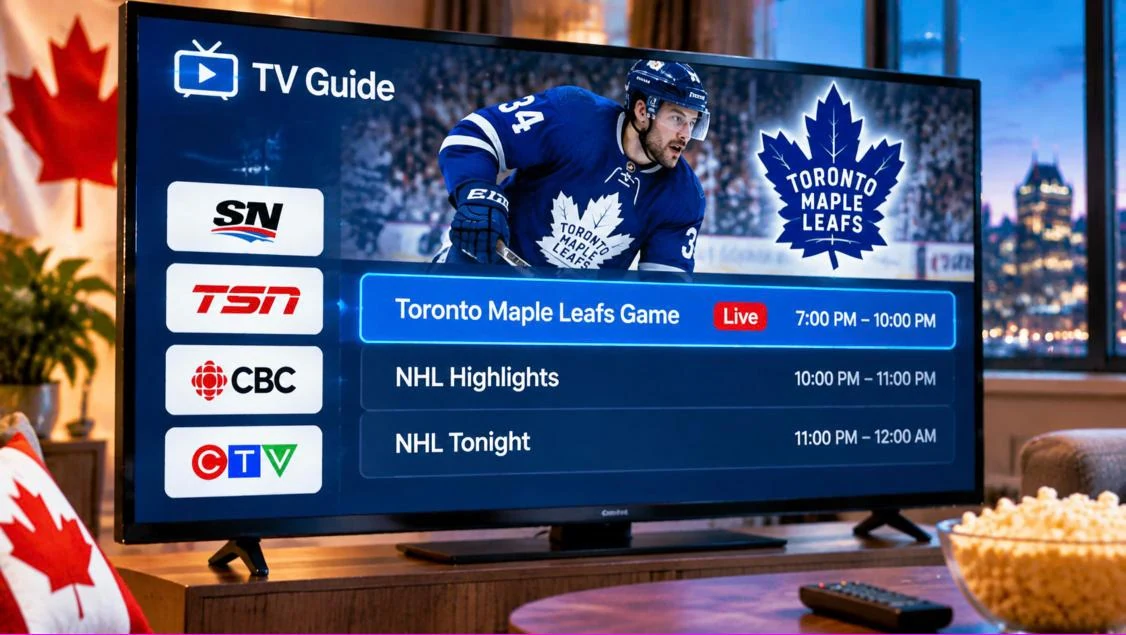
Toronto is a serious sports city, and the calendar barely pauses. The Maple Leafs and Raptors run through the winter and spring, the Blue Jays carry the summer, Toronto FC brings the soccer crowd, and the Argonauts hold down the CFL side. For a lot of households, following the local teams is a big part of why they want a flexible channel setup rather than being boxed into one broadcaster’s bundle. IPTV’s draw for sports fans is breadth — the ability to find the games you care about — though which specific events are available varies, so sports-focused viewers should check their key channels during a trial rather than assume.
Getting set up in a Toronto condo or house
The setup itself doesn’t change with your postal code, but the Toronto context has a couple of quirks. In a condo, your internet may come through the building (Beanfield and similar), and Wi-Fi congestion in a tower full of networks is real — if you can run a wired connection to your streaming device, do, because it cuts through the interference that plagues dense buildings. In a house, you have more room to place your router well and wire things up. Either way, the recipe is the same: a streaming device like a Firestick or Android box, a player app, and your subscription details. Our free trial lets you confirm it all runs smoothly on your own connection first, and you can see plans on our pricing page.
Support that fits a busy city
TVNow handles support directly over WhatsApp, which suits Toronto’s pace — you message, a person answers, and your account or connection gets sorted without an email queue. Payment is handled by Interac e-Transfer, which every Canadian bank supports. If you ever hit a problem, our troubleshooting guide covers the common fixes, and most issues in a well-connected city like Toronto come down to in-home Wi-Fi rather than anything on the service side.
Cord-cutting and the cost picture in Toronto
Part of what pushes Torontonians toward IPTV is simple math. Traditional cable and satellite packages in the city, particularly once you add international tiers or sports, climb quickly, and the big providers bundle in a lot you never watch. A streaming-based setup appeals because you’re paying for a connection and a device you probably already own rather than a loaded monthly bill. The trade-off worth being honest about is that cable comes with a single provider’s guarantees and a storefront on every corner, whereas a streaming setup puts a little more of the setup and troubleshooting in your hands. For most Toronto households with decent internet — which is most of them — that trade leans in favour of the flexible, lower-cost route, especially where the goal is international content cable charges a premium for.
Neighbourhood notes across the GTA
Toronto isn’t one uniform market, and where you live changes the small details. Downtown and the condo corridors along the waterfront and Yonge are Beanfield and Bell fibre territory, where speed is abundant but Wi-Fi congestion between hundreds of neighbouring units is the thing to manage — wire your device and you’re set. In Scarborough, North York, and Etobicoke, you’re more likely in a house or low-rise on Rogers cable or Bell, with more physical space to position a router well and run Ethernet. The inner suburbs also concentrate many of the communities whose international channel demand makes IPTV attractive in the first place, so the service and the setting often line up neatly. None of this changes what you install — it just changes which practical tip matters most for your particular home.
Winter is streaming season
Toronto winters do a lot of the selling. From the first real cold snap through to spring, indoor evenings stack up, and that’s exactly when a broad, flexible channel setup earns its keep — the Leafs and Raptors in full swing, international news and entertainment on tap, and no reason to leave the couch. It’s worth having your setup dialled in before the deep-winter stretch rather than troubleshooting Wi-Fi in January, so if you’re considering a change, the shoulder months are a sensible time to test everything on your own connection while the stakes are low.
A quick checklist before you switch in Toronto
If you’re ready to try IPTV in the city, a short run-through saves hassle later. Confirm your internet gives you at least 25 Mbps on a speed test run at your TV — in most of Toronto this is a formality, but condo Wi-Fi can surprise you, so test at the device rather than next to the router. Make a list of the channels that actually matter to you, especially any international or sports channels that are the reason you’re switching, and verify them on a trial before you cancel anything else. Decide on your device — a Firestick or Android box for most people — and plan to wire it in if you’re in a congested building. And keep your login details somewhere safe once you’re set up. Work through that list and the switch is smooth; skip it and the usual snag is discovering a must-have channel or a Wi-Fi weak spot after the fact, both of which a trial would have caught.
Bottom line
Toronto is close to an ideal city for IPTV: the internet is strong almost everywhere, so reliability is rarely a concern, and the city’s diversity and packed sports calendar are exactly what a flexible channel setup serves better than a rigid cable bundle. Whether you’re in a downtown condo or a house out in the GTA, the setup is the same — confirm the channels you want on a trial, use a wired connection where you can, and you’ll have a setup that fits the city. For the wider provincial picture, see our Ontario IPTV guide.