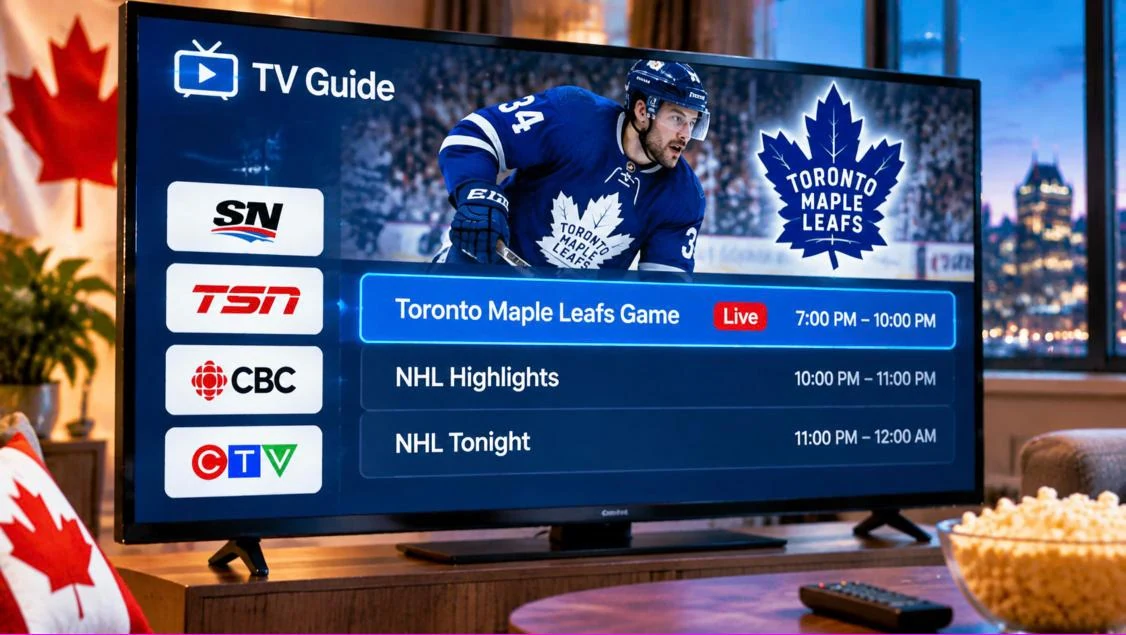

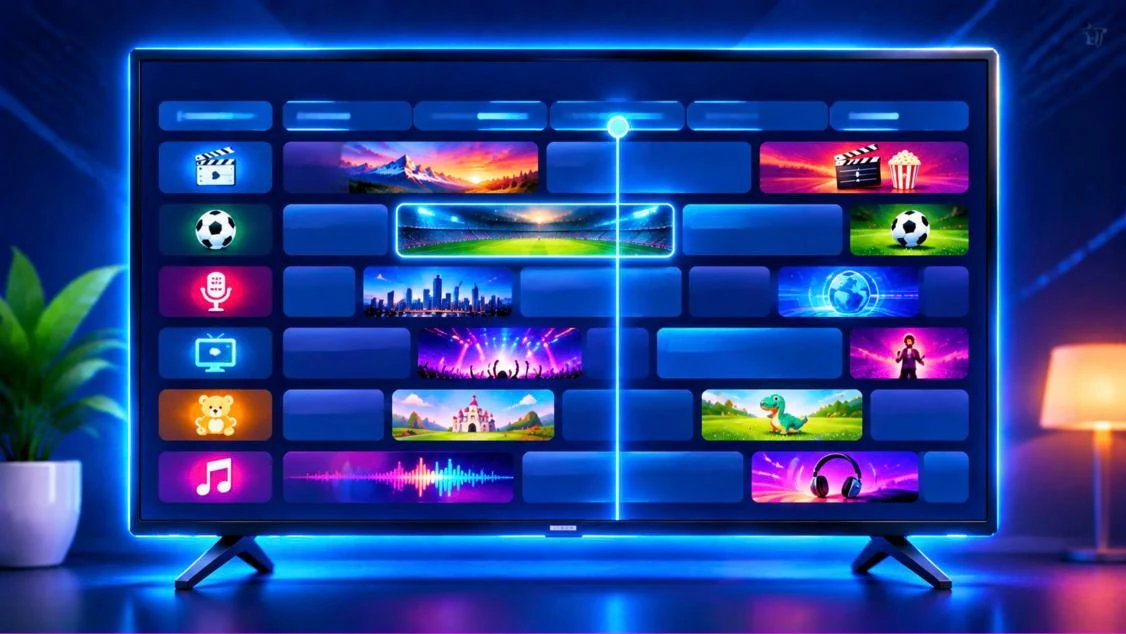
One of the things that makes IPTV feel like proper television rather than a list of links is the on-screen guide — the grid that shows what’s on now, what’s coming up, and lets you scroll through the schedule channel by channel. That guide is called the EPG, short for Electronic Programme Guide, and when it’s set up well it transforms the experience. When it’s missing or wrong, the service feels half-finished. The good news is that EPG is usually automatic or close to it, and the handful of cases where it needs manual attention follow a clear pattern. This guide explains what the EPG is, how to set it up, and how to fix the common problems.
Quick answers
- What it is: the EPG is your IPTV TV guide — the grid of what’s on now and next, pulled from a data file your app downloads.
- Usually automatic: with a Xtream Codes login, the guide typically loads on its own; a plain M3U playlist may need the EPG URL added separately.
- Give it time: apps refresh the guide on a schedule, so a new setup can take a few hours to fill.
- Wrong times? That’s almost always a timezone offset setting in your app, not broken data.
What the EPG actually is
Behind the on-screen grid is a data file, usually in a format called XMLTV, that lists every programme on every channel with its start and end times. Your IPTV app downloads this file and matches it to your channels to build the guide you see. It’s entirely separate from the video streams themselves — the streams deliver the picture, the EPG delivers the schedule information — which is why you can sometimes have perfectly working channels with no guide, or a guide with occasional gaps. Understanding that separation makes every EPG problem easier to reason about: it’s always either that the app isn’t getting the data file, or that it’s getting it but not matching or displaying it correctly.
Setting up the EPG
How you set up the guide depends on how your service is connected. The two common methods behave differently.
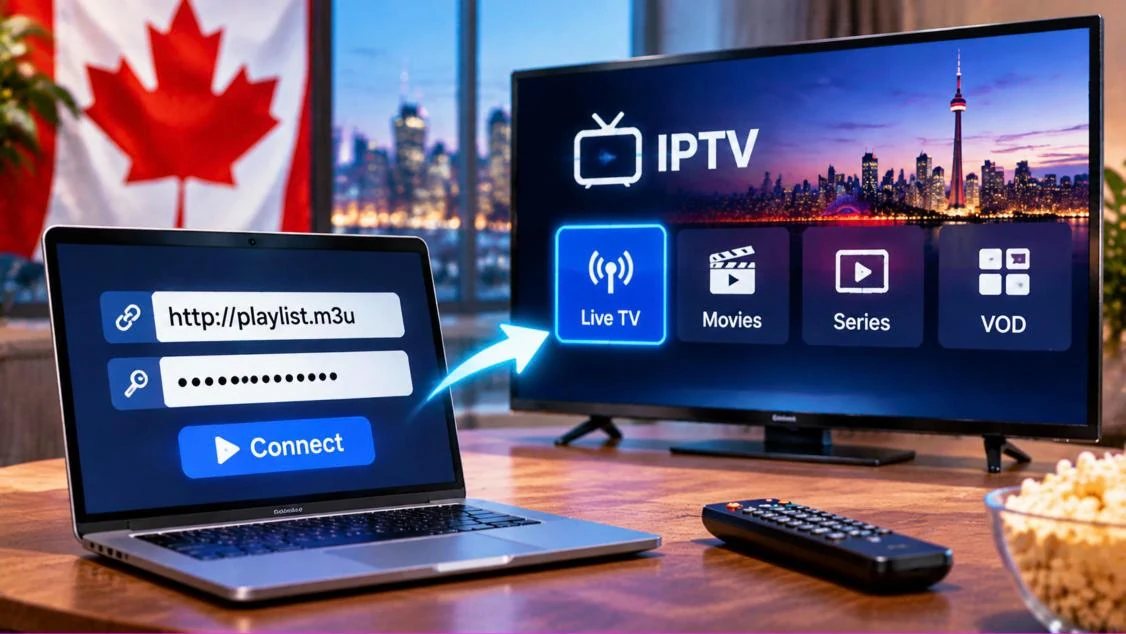
With a Xtream Codes login — a username, password, and server URL — the EPG data usually comes bundled with the playlist automatically. You typically don’t have to do anything; the app pulls both the channels and the guide from the same source. This is the smoothest setup and the reason many people prefer a Xtream Codes connection where their service offers one.
With a plain M3U playlist, the channels and the guide are often separate. The M3U gives you the channel list, but you may need to add the EPG (XMLTV) URL into your app’s settings as a second step. If your guide is empty on an M3U setup, a missing EPG URL is the first thing to check. TVNow subscribers can get the correct EPG URL for their account by messaging support through our homepage on WhatsApp.
Setting it up in TiviMate and IPTV Smarters
In TiviMate, the EPG is managed per playlist. When you add or edit a playlist, there’s an EPG source option; with Xtream Codes it’s usually detected automatically, and with M3U you add the XMLTV URL there. TiviMate then refreshes the guide on its own schedule, and you can force an update in the playlist settings if you don’t want to wait. Our TiviMate guide covers this in more depth.
In IPTV Smarters, the guide likewise comes automatically with a Xtream Codes login. If it’s not showing, check that EPG is enabled in the app’s settings and refresh it. Across both apps the principle is the same: confirm the source is set, then give the app a chance to download and build the guide rather than expecting it instantly.
Why the guide is empty or incomplete
An empty or patchy EPG is the most common complaint, and it usually isn’t a fault. Three things explain nearly all of it. First, timing: apps don’t rebuild the guide the moment you open them — they refresh on a schedule, so a freshly set-up guide can take a few hours to populate. Second, the source: on an M3U setup the EPG URL may simply not be entered. Third, coverage: not every channel in every service carries complete guide data, so some channels will show a full schedule while others show little or nothing. That unevenness is at the data source, not in your app, and it’s normal. If every channel is blank after several hours and the EPG source is correctly set, that’s the point to refresh manually and, if it persists, check with support.
Fixing a guide that shows the wrong times
If your guide loads but every programme is shifted by a few hours — showing the wrong thing as “on now” — the cause is almost always a timezone offset, not bad data. EPG data carries its own time reference, and your app applies an offset to match your local time. In Canada that matters because the country spans multiple time zones. Look in your app’s settings for an EPG time offset or timezone option and adjust it until “on now” lines up with reality. This is a one-time fix once you get it right, and it’s purely a display setting — the underlying data was fine all along.
Keeping the guide healthy
Once set up, the EPG mostly looks after itself, but a couple of habits keep it reliable. Let the app refresh on its schedule rather than forcing it constantly, since repeated manual refreshes don’t add data that isn’t there yet. And if you ever change your playlist or switch connection methods, remember the EPG source may need re-setting, because the guide is tied to how the playlist is connected. If the whole app starts misbehaving — guide and channels alike — that’s a broader issue covered in our main troubleshooting guide rather than an EPG-specific one.
Still stuck?
If you’ve confirmed the EPG source, corrected the timezone offset, forced a refresh, and given it time, and the guide still won’t fill, support can confirm whether your account’s EPG URL is correct and whether the data is flowing. TVNow support runs over WhatsApp, so it’s a quick exchange rather than an email wait. If you’re still choosing a service and a good guide matters to you — it does to most people once they’ve had one — our free trial lets you see the EPG working on your own setup first, and plans are on our pricing page.
Why channel names have to match for the guide to work
There’s one more piece worth understanding, because it explains guides that are partly right and partly wrong. For the schedule data to appear against the correct channel, the app has to match each channel in your playlist to the right entry in the EPG file. That matching relies on an identifier — often called a channel ID or tvg-id — that links the two. When the identifiers line up, the guide slots in perfectly. When a channel’s playlist entry doesn’t carry the right identifier, the app can’t find its schedule, so that channel shows no guide even though the data for it exists in the file. This is why you’ll sometimes see most channels with a full guide and a few stubbornly blank ones: it’s a matching issue at the source rather than anything you’ve done wrong. It’s not something you can fix from your end on a well-built service — it’s handled by whoever maintains the playlist and EPG — but knowing it’s the cause saves you from chasing a setting that doesn’t exist.
Catch-up and recording rely on the guide too
If your service and app support catch-up TV or recording, both lean on the EPG to work, which is another reason a healthy guide is worth getting right. Recording a programme means telling the app to capture whatever the guide says is on that channel between two times, so if the guide is missing or its times are off, scheduled recordings land on the wrong content. Catch-up — rewinding to a programme that aired earlier — uses the guide to know what was on and when. So the timezone offset and source setup covered above aren’t just about a tidy on-screen grid; they’re what make these more advanced features dependable. Get the guide accurate first, and the recording and catch-up features built on top of it fall into place.
Bottom line
The EPG is simply a schedule data file your app downloads and matches to your channels, and most of the time it’s automatic — especially with a Xtream Codes login. When it’s empty, the usual causes are a missing EPG URL on an M3U setup or just needing time to populate; when the times are wrong, it’s a timezone offset. Set the source, give it a few hours, adjust the offset if needed, and you’ll have the proper on-screen guide that makes IPTV feel like real television.